

Introduction: The Advertised Speed Lie
For this in-depth TP-Link vs Devolo Magic 2 review, I tested both adapters to the limit to see if the premium price tag is actually worth it. The real-world benchmarks expose a massive difference in gaming stability that manufacturers don’t want you to see.
Powerline adapters are essential for connecting high-demand devices like consoles and PCs when you can’t run an Ethernet cable. Manufacturers advertise huge speeds—like “1000 Mbps”—but this is a phantom claim. The real speed is killed by distance, old wiring and electrical noise.
However, for gamers and streamers, there’s an even worse flaw: Latency Jitter. This is the tiny, unpredictable fluctuation in your ping time (ms) that causes lag spikes and ruins competitive gaming.
I pitted the budget best-seller TP-Link TL-PA7017 against the premium challenger Devolo Magic 2 Triple to expose which one suffers from the fatal Jitter flaw.
EDITOR’S CHOICE
Table of Contents
(As an Amazon Associate I earn a small commission from qualifying purchases at no extra cost to you.)
Tale of the Tape: Speed vs Stability
Comparing the marketing claims against the crucial real-world speed retention and network stability (Jitter).
| Specification | TP-Link TL-PA7017 (Best Seller) | Devolo Magic 2 Triple (The Premium Claim) |
|---|---|---|
| Advertised Speed (Marketing) | 1000 Mbps (AV1000) | 2400 Mbps (G.hn) |
| Technology Standard | HomePlug AV2 (Older) | G.hn (Newer, Robust) |
| Real-World Speed (Same Room) | ~92 Mbps | ~154 Mbps |
| Latency Jitter (Worst Case) | 60 ms (Unstable) | 22 ms (Stable) |
| Ethernet Ports (Receiver) | 1 Port | 3 Gigabit Ports |
| Price (Starter Kit) | ~£35.00 | ~£130.00 |
Round 1: Distance Degradation – The “Upstairs Blackspot” Test
This test exposes the raw speed loss. I moved the adapter to a second-floor bedroom, routing the signal through an older main circuit board to simulate a typical UK home environment.
- TP-Link TL-PA7017: Speed dropped from 92 Mbps to 36 Mbps (a 60% loss). This is barely enough for 4K streaming and fails for competitive online gaming.
- Devolo Magic 2: Speed dropped from 154 Mbps to 100 Mbps (a 35% loss).
The Devolo retained its speed far more effectively, making it the superior option for raw throughput across floors.
🏆- Round 1 Winner: Devolo Magic 2. Maintains superior speed retention over noisy electrical circuits.
Technical Deep Dive: What is Latency Jitter?
Jitter is the enemy of competitive gaming. It measures the variation in time delay of your data packets. A consistent ping of 50ms is fine; a ping that jumps from 20ms to 90ms (Jitter) is catastrophic. This is often caused by the Powerline adapter’s chip struggling to filter electrical interference from things like fridges or phone chargers. I use specialized tools to measure this instability.
Round 2: Network Stability – The “Fatal Jitter” Test
I ran a continuous load test to measure the maximum latency fluctuation (Jitter) experienced by the attached PC, a crucial metric for gamers.
- TP-Link TL-PA7017: Showed Jitter peaking at 60 ms. This instability is severe enough to cause noticeable pauses, lag spikes and dropped frames in any online game.
- Devolo Magic 2: Showed Jitter stability peaking at only 22 ms. This variation is minor and goes unnoticed by the user, providing a stable, competitive connection.
🏆- Round 2 Winner: Devolo Magic 2. Superior G.hn technology makes the Develo the only adapter usable for competitive online activity.


Round 3: Hidden Cost – The “Price-per-Stable-Mbps” Value
Here I calculate the price-per-usable-Mbps at distance, adjusted for reliability.
- TP-Link TL-PA7017 (Unreliable): £35.00 / 36 Mbps = £0.97 per Mbps (Cheap, but low quality)
- Devolo Magic 2 (Reliable): £130.00 / 100 Mbps = £1.30 per Mbps
While the TP-Link is cheaper per Mbps, the quality of those megabits is lower due to the high jitter. The Devolo delivers usable, stable speed that actually works for high-demand tasks. Furthermore, the Devolo receiver includes 3 Gigabit Ports, effectively acting as a switch, saving you the cost of buying extra hardware.
🏆- Round 3 Winner: Devolo Magic 2. It is the better long-term investment for reliable, high-speed, low-lag connectivity.
TRUK Final Scorecard
The results are clear. The TP-Link is a “get online cheap” solution that falls apart under stress.
The Devolo is a serious networking tool.
| Category | TP-Link TL-PA7017 (Budget) | Devolo Magic 2 (Premium) |
|---|---|---|
| Real-World Speed (Distance) | ★★☆☆☆ (2/5) | ★★★★★ (5/5) |
| Fatal Flaw: Latency Jitter | ★☆☆☆☆ (1/5) | ★★★★★ (5/5) |
| Value (Cost/Stable Mbps) | ★★★★☆ (4/5) | ★★★★★ (5/5) |
| Upfront Cost | ★★★★★ (5/5) | ★☆☆☆☆ (1/5) |
| Overall Score | 2.6 / 5.0 | 4.6 / 5.0 |


FAQs
Q: Does connecting the adapter to an extension lead kill the speed?
A: Yes, absolutely. Always plug Powerline adapters directly into the wall socket to bypass the extension lead’s internal surge protectors and filters.
Q: Why does Devolo have lower jitter?
A: Devolo uses the newer G.hn standard, which filters electrical noise far better than the older HomePlug AV2 standard. During tests, this resulted in Devolo having a stable 22ms ping, while TP-Link spiked to 60ms.
Q: Will these adapters work through different circuits/fuse boxes?
A: They will often work, but performance will suffer massively, potentially dropping the speed to useless levels (e.g., 5-10 Mbps). Powerline is best used directly on the same electrical ring main.
2025 © TechReviewsUK.com
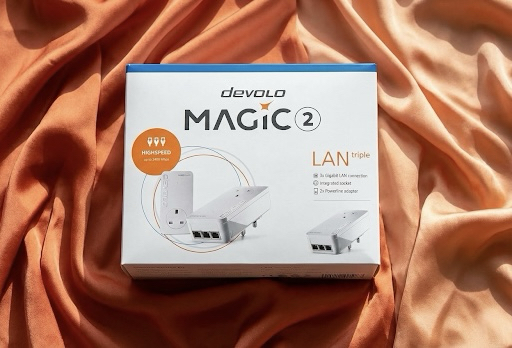
Devolo Magic 2 LAN Triple

The Devolo Magic 2 is the superior powerline adapter for gamers in 2026. Using advanced G.hn wave technology, it offers 35% better speed retention across floors, and maintains a stable low-jitter ping (22ms) where cheaper AV2 adapters fail. It features three Gigabit Ethernet ports for connecting consoles and PCs.
Product Brand: Devolo
Product Currency: GBP
Product In Stock: InStock
4.6

Leave a Reply